

Brief Introduction Of PD Door |PT Door |TSTC
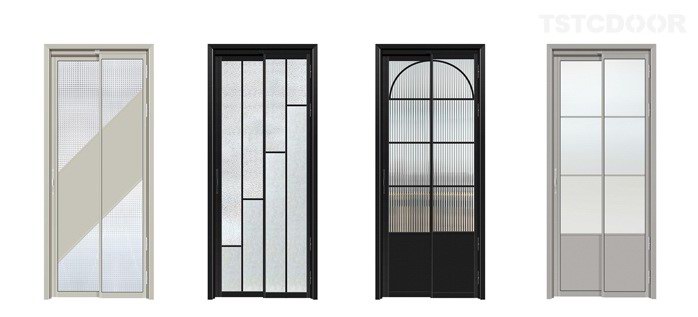
PD Door also called PT Door or slide‑swing composite door, it originated in Singapore. P stands for Slide, D stands for Swing. In China, it was also called PT Door, P is the first letter of Pingkai, T is the first letter of Tuila, so PT possess the same meaning of PD .... Its core working logic as slide the door leaf horizontally first, then swing it flat against the wall, enabling 100% full opening of the doorway.
Key Advantages
▪ Dual‑mode Opening. Conventional sliding doors open to at most half the doorway width, standard swing doors require clearance for door rotation. The PD door can be partially opened for ventilation or fully opened, making it convenient to move large‑sized furniture.
▪ Overhead‑track Design without Floor Rail. There are no recessed grooves on the floor. Robot vacuum cleaners can pass through freely. Trip hazards and dirt buildup hard to clean inside floor tracks are avoided.
▪ Excellent Space‑saving Performance. When swung open, the sash lies flat against the wall without occupying interior passage space. It is ideal for narrow doorways, compact kitchens and small bathrooms (optimal doorway width: 1000‑1400 mm). It prevents collisions with toilets or cabinets during opening.
▪ Attractive Modern Appearance. Most models adopt ultra‑narrow aluminium frames with tempered glass, matching minimalist, modern and light‑luxury interior styles. Options include chameleon glass and acid‑etched frosted glass.
Main Disadvantages
▪ High cost. The complex hardware system makes it considerably more expensive than regular overhead sliding doors. It heavily relies on high‑quality hardware, poor‑grade hardware tends to cause malfunctions.
▪ Requirements for wall and doorway: The side wall must not be blocked by cabinets or water pipes for the sash to swing flat against it. The wall above the doorway must provide sufficient load‑bearing capacity. The overhead track shall be mounted on solid walls, lightweight hollow walls are not applicable.
▪ Higher failure rate than ordinary doors: Track joints exist. Low‑quality products are prone to sash sagging, abnormal noise and jamming, bringing difficulties to later‑stage maintenance.
▪ Slightly inferior sealing performance compared with standard swing doors. It is for interior partition use only and not suitable for exterior entrance doors.
Applicable & Non‑applicable Scenarios
▪ Applicable: Kitchen doors for small‑size apartments, bathroom doors, balcony partitions, narrow‑width partitions for studies.
▪ Non‑applicable: Exterior doors, large‑span balconies (doorway width >1.6 m is not recommended), locations with lightweight hollow walls.
Market Pattern & Future Trends
PD Door (PT sliding‑swing composite door) is a niche innovative interior aluminium door. It cannot fully replace conventional swing or sliding doors, yet enjoys growing demand driven by compact‑apartment renovation and minimalist interior trends. The domestic market is mainly composed of medium and small manufacturers, with products categorized into high-end flush-mount, mid-end standard and low-end copycat versions. In the next 3 to 5 years, this niche segment will sustain stable growth, targeting small-space home decoration, designer customized projects and overseas B-end markets. The industry will undergo reshuffling, with standardized and high-quality manufacturers taking the lead. Flush-mount design, standardized hardware systems and expanded overseas high-end business will be the key development trends.
 Holiday Notice For China Natio
 Festival Greetings |Mid-Autumn
 Brief Introduction Of PD Door
 Access-controlled Revolving Do